
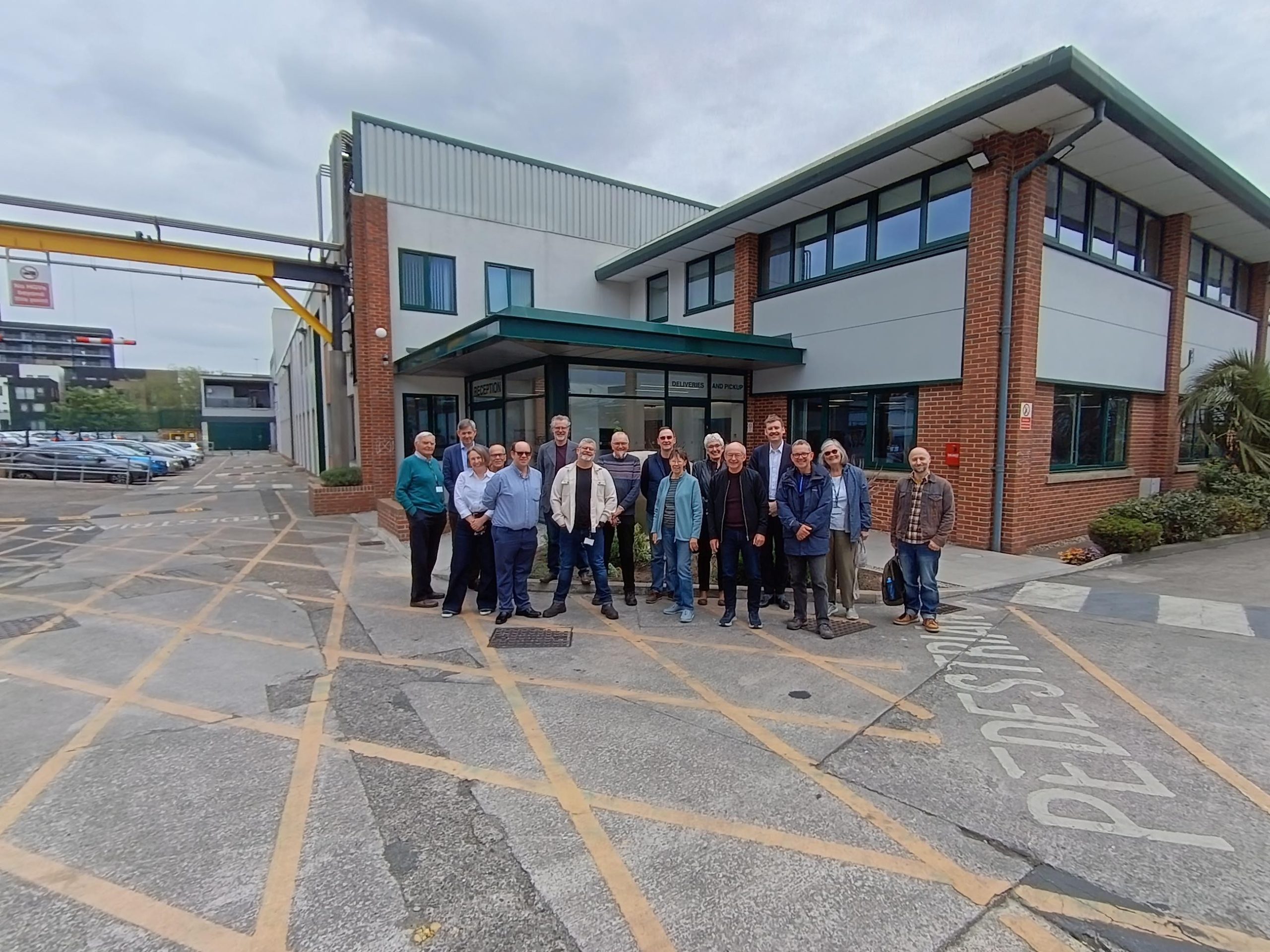
Vickers Oils is a long-established Leeds family firm, with a worldwide business and a reputation for quality products. A group of ten from Leeds Civic Trust had a fascinating visit to their main plant on 7th May. We were shown round by Scott Glenn and Will Vickers.
Vickers Oils produces oils and greases used in marine engineering, textile manufacture, and food industries. Established in 1828, the firm is still family-run, Will Vickers (the present Managing Director) being the 8th generation of the Vickers family. Several other family members are involved in the business or in its charitable foundation. They have two sites in Leeds, the main one (the Airedale Mills site) on the River Aire next to the Climate Innovation District, and a newer one dealing with their food industry products a mile or so away in Total Park, Cross Green. Most of their products are exported, either directly or through their distributors worldwide.
Our first stop was to the place where they receive all their incoming materials. They have a number of trusted suppliers, but our guide stressed that testing starts right here. Their raw materials are roughly 80% vegetable oils and 20% mineral oils, with a small but increasing proportion of synthetic oils.
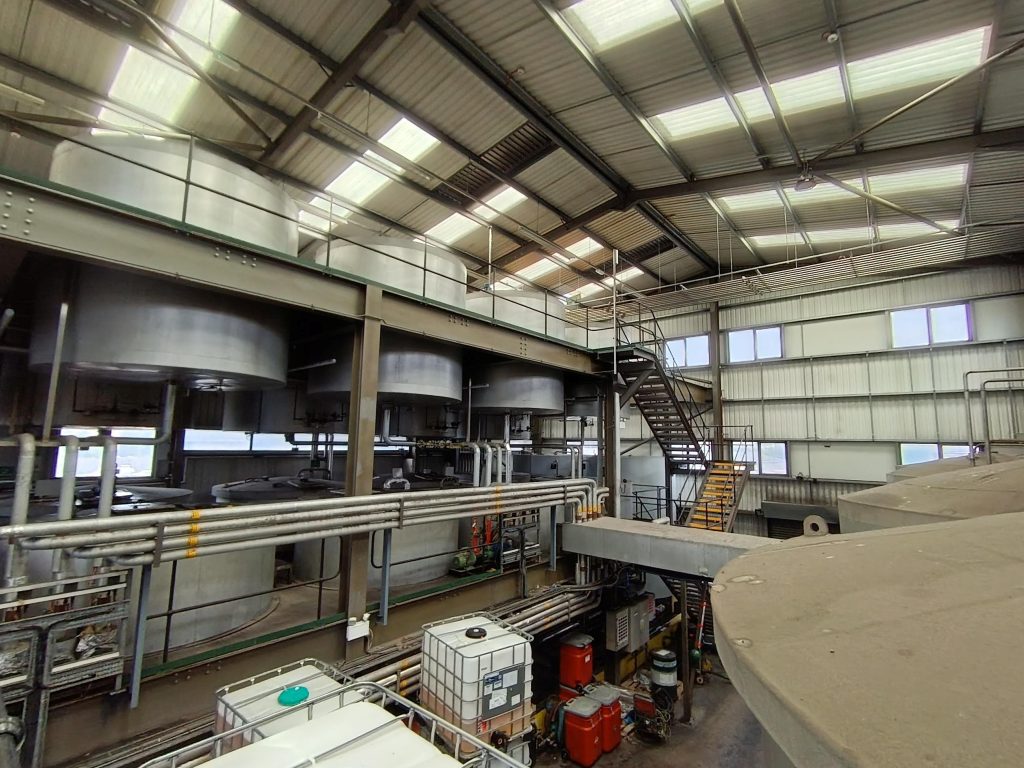
We moved on to where they store materials before use – in a number of large metal tanks which they had acquired from the Guinness Brewery in Dublin. Before the contents of any tank are changed, a thorough cleaning process is carried out, and again tests are carried out to check that nothing remains of the previous contents.
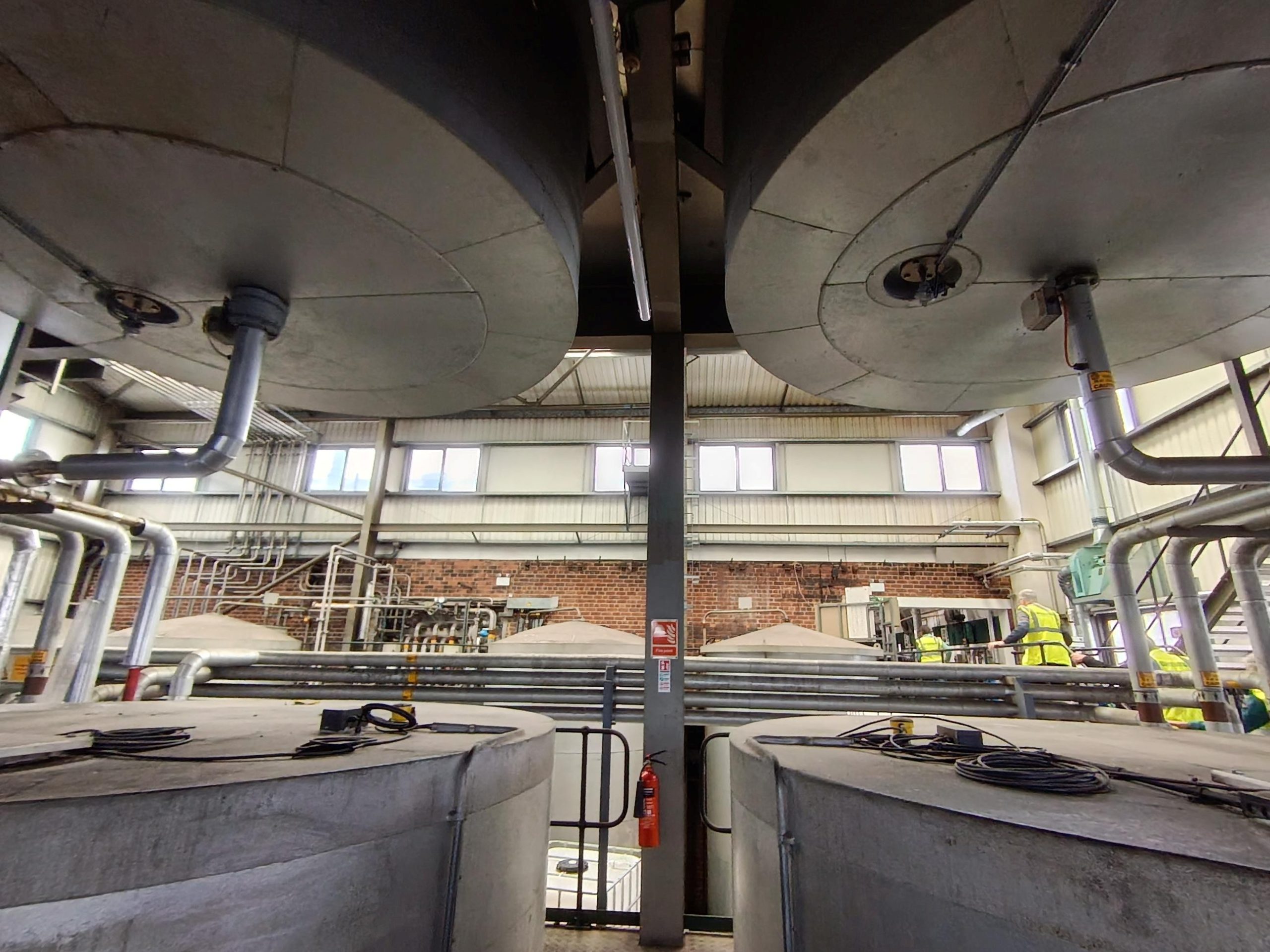
Next we saw the blending machines. The actual contents of each product are of course, trade secrets. The whole process is fully automated, tested, and documented: test samples are kept for three years in case there are later problems – more concern for the quality and reliability of what they produce. The blended products are poured into containers of various sizes from 5 up to 208 litres. All the metal drums used are brand new, many of them with the customer’s logo on: the warehouse is an impressive and colourful sight. An example of the concern for quality is that the top of every barrel is vacuum cleaned before it is dispatched. An example of their concern for sustainability is that they have reduced the amount of plastic packaging by 95% over two years. Some of what they use is itself made from recycled plastic bottles.
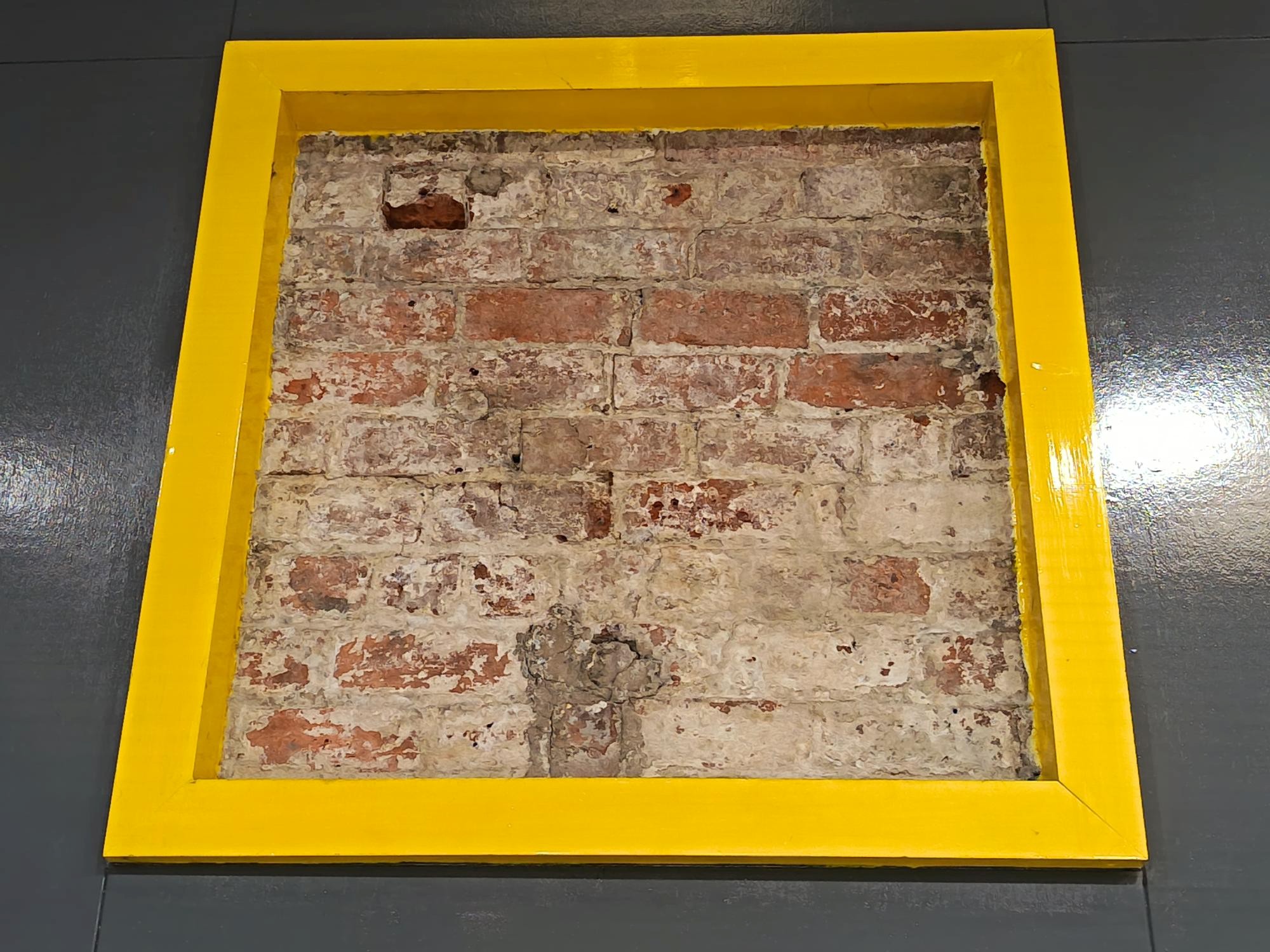
The warehouse, although very modern inside, is the oldest part of the present site, dating from 1877, and two sections of the original external brickwork have been left exposed, visible behind glass panels.
We went into one of their chemical laboratories and looked into the other. One is for quality control, the other is for research and development – all very modern looking, with some instruments costing 5-figure sums, but essential for the present and the future. It was their research that led the company, for example, to produce the world’s first biodegradable stern tube (marine) lubricant.
We then retired to a meeting room and were joined by several of their senior managers. The company archivist, Robert Curphey, told us about the history of the company and showed us pictures of some of the extensive archive material that they hold going back to Mary Randall Vickers and the premises on Bishopgate Street. Now, with the ninth generation of the family already involved in the business, Vickers will celebrate their 200th anniversary in 2028.
A Q&A session followed: Vickers staff were as keen to find out about Leeds Civic Trust as we were to ask questions about Vickers. Throughout the visit, they stressed their commitment to quality, and a management ethos of steady product improvement, looking for solutions to problems from all their staff, and treating all their staff fairly. They also expressed their interest in becoming more involved with the city itself.
This was a most interesting visit to a Leeds company with a long history, and still with a thirst for expansion while maintaining the quality of their products.