
The theme for our Leeds400 Art Competition is ‘Prospects of Leeds’. In this article, Leeds Civic Trust member Dr Richard Tyler tells us about the 1712 prospect of Leeds, created by Ralph Thoresby and Francis Place.
In 1626, the new Royal Charter of Leeds greatly improved the economic prospect of the town. It enabled the merchants to regulate the source of their wealth, the woollen cloth trade, and to dominate the industry in the West Riding. And after nearly a hundred years, one of their number commissioned the very first pictorial prospect of Leeds.
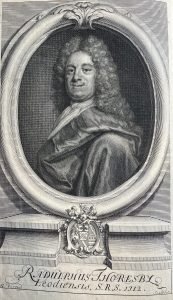
The Thoresby family were well-to-do cloth merchants, with a fine house on Kirkgate. John Thoresby was also a collector of antiquities, and he was succeeded by his son Ralph, not only in the business, but also in his antiquarian enthusiasm. As was popular at the time, Ralph accumulated a renowned cabinet of curiosities, and he welcomed frequent visitors to his museum.
Ralph was always interested in art, indeed as a young man he set himself to try. In 1677, in London, he noted in his Diary, “After dinner, went to the Strand to inquire after crayons … and got sixty, a set, for 2s. 6d.” And a couple of days later, “At home all day, drawing a picture …” But he later wrote, “At home, imitating Mr. Calamy and Mr. Caryl’s pictures: Oh, that I could as well follow their heavenly directions!” He made friends with many local artists. On 15 August 1682, “most of the forenoon with Squire Lambert, showing him my collection of coins, pictures, &c. and with Mr. Lodge, our townsman born, an ingenious traveller and painter.”
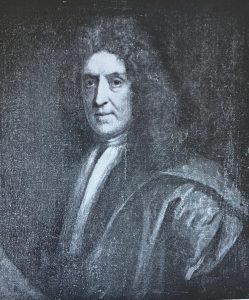
William Lodge in turn introduced him to the York Virtuosi, a group typical of the age, with wide-ranging interests in the arts and sciences. They included Ralph’s particular friend, Thomas Kirke of Cookridge, and Dr Martin Lister of York, a Fellow of the Royal Society. The group also included two other artists, Henry Gyles, a glass-painter, and Francis Place, a genial gentleman, Britain’s first notable landscape artist. He was also a printmaker and he dabbled in pottery, but his lifelong preoccupation was landscape. He began with meticulous topography, but as he toured the country, he developed an increasingly free style, anticipating the great landscapists of the eighteenth century. Ralph noted in the Diary, in April 1702, “Walked to York, visited Mr. Gyles” and then in June, “Evening, at the manor with the ingenious Mr. Place” [he lived in the King’s Manor, now opposite York City Art Gallery] and the next day, “Evening sat up too late with a parcel of artists I had got on my hands, Mr. Gyles, the famousest painter of glass perhaps in the world.”
Doubtless inspired by the Virtuosi, Ralph turned his attention to an account of Leeds. As he wrote the text, and in due course, arranged its publication, he turned to his friend Mr Place for a view of the town. Place had drawn prospects of towns throughout his travels, for instance, Richmond (in Yorkshire) in 1674, and Chester in 1699 [the drawing is in Leeds], and York often, recently in 1705.
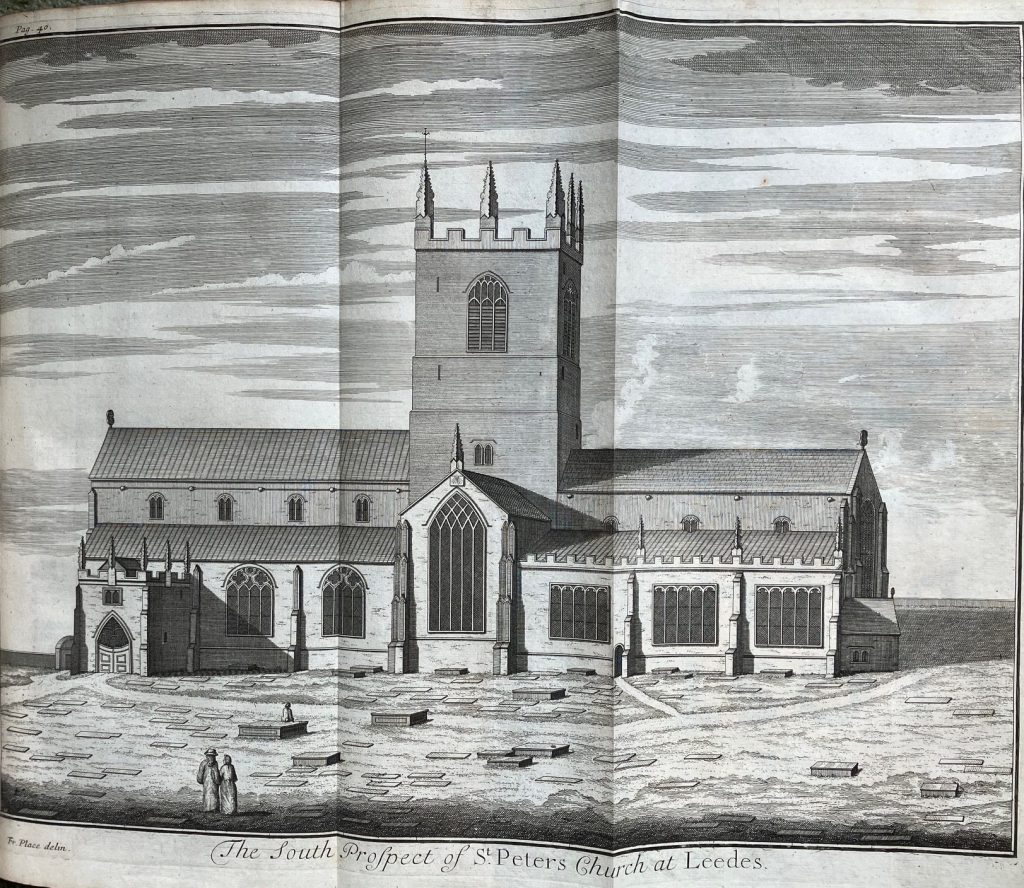
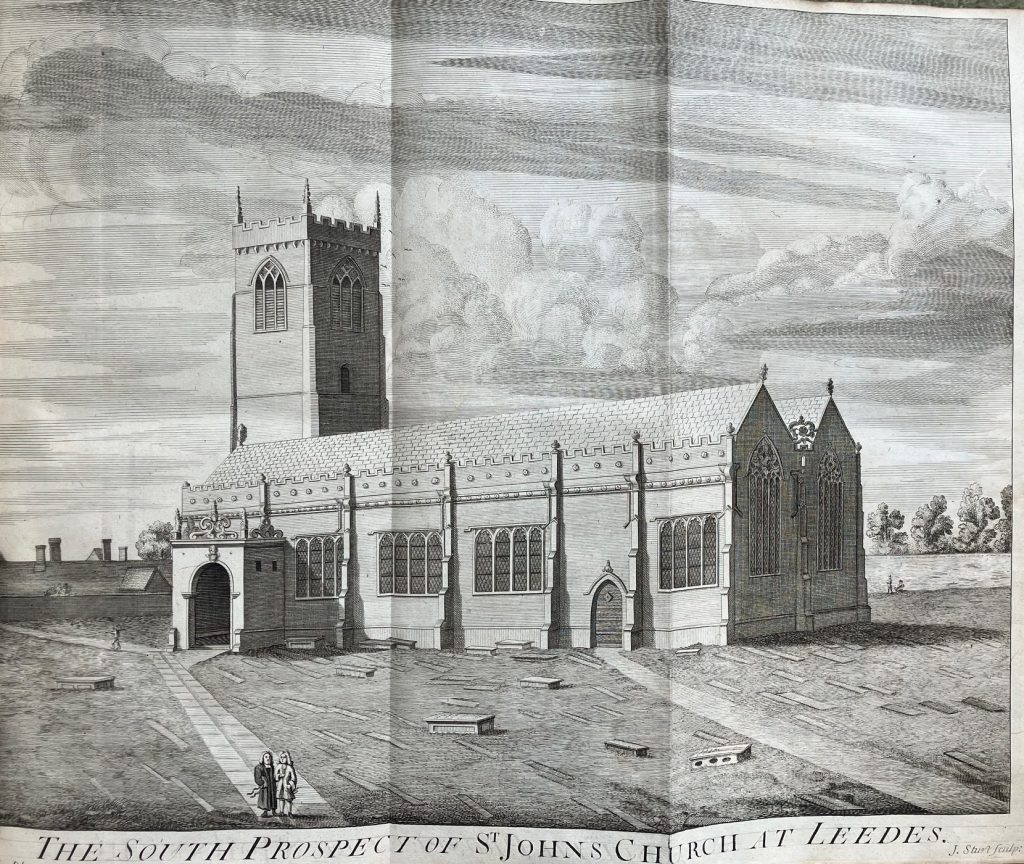
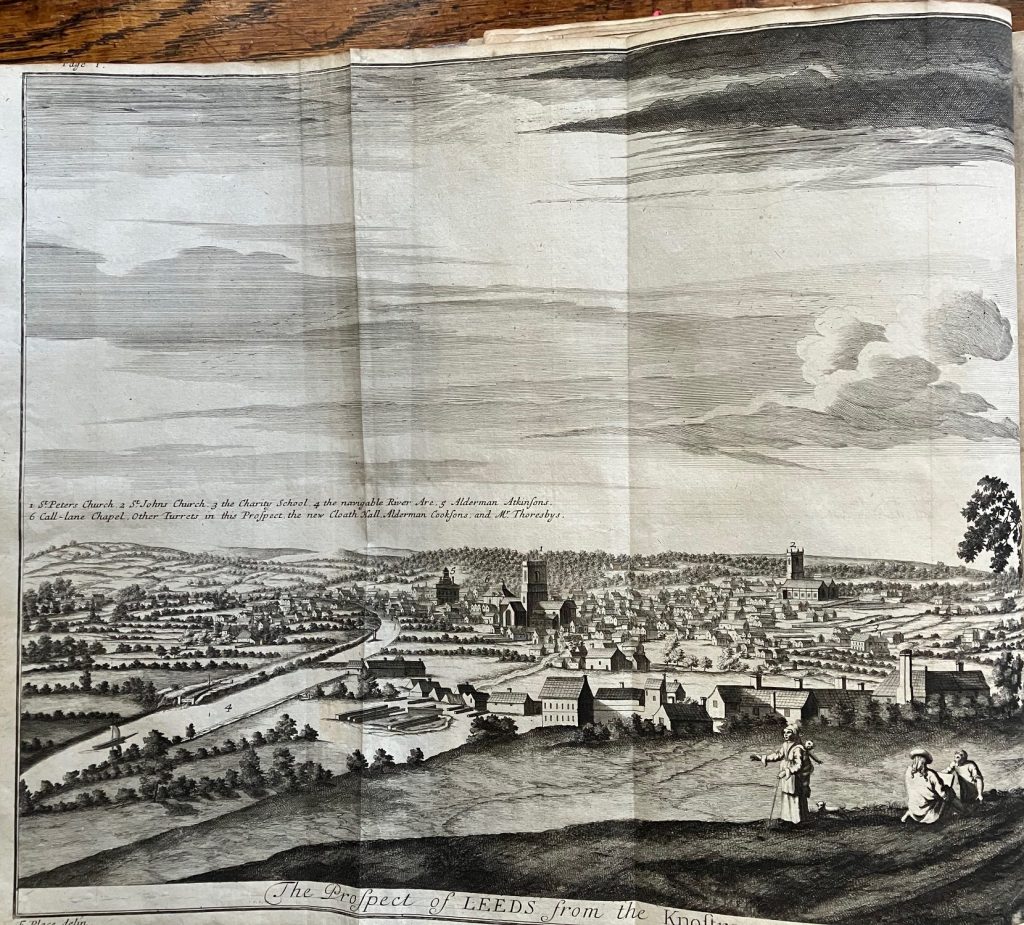
So in 1712, Francis came to Leeds for a week for this purpose, he was then 65, ten years Ralph’s senior. On 11 September, the two set out from town, on the road to Knowsthorpe, to Cavalier Hill [now the site of Mount St Marys Church in Richmond Hill]: “Morning, read before family prayer; then walked with the ingenious artist, Mr. Place, to Cavalier Hill, to take a prospect of the town and navigable river, which took up most of day; evening, at Alderman A[tkinson] and with Mr. Place, at Coffee-house.” The next day, “Morning, read; then, again taking prospect of the town; and after, at the New Church [St John’s on the Headrow], taking its prospect; evening, with him and cousin K. at the Talbot.” And the following day, “Morning, read; showing collections to strangers; then, taking the prospect of the Old Church [St Peter’s, at the bottom of Kirkgate]; and again at the hill, to finish that of the town, till four; after, at Alderman Milner’s and Mr. Skinner’s, with Mr. Place.” On the 14th, “rode with Mr. Place to Tong” (Tong Hall was the home of their mutual friend, Sir George Tempest) and then on 15th, “Morning, read, &c.; then, rode with my friend, Mr. Place, to the Warren-house, upon Bramham Moor, (the half-way house to York,) where, after a refreshment, we parted.”
A month later, Ralph “rode to York, was glad to find the three prospects so near finished by Mr. Place.” Mr Place added an artist taking a sketch in the foreground of his town prospect, with a lowly companion (who was undoubtedly not Ralph Thoresby). Rather pointedly, a blind woman walks by with a baby and a small dog. Below the Hill are fields with tenter frames (for drying and stretching woollen cloth), and the ‘River Are’ flows to the left, with a few small sailing barges. South of the river, there are just a few dozen houses. The town (of about 6,000 people) rises up from the river, via Briggate, to the Head Row. The skyline is dominated by the Old Church (St Peter’s, 14th century) and the New Church (St John’s, 1630s). The town is surrounded by fields, and a good deal of woodland still. The view was titled ‘The Prospect of Leeds from the Knostrop road’.
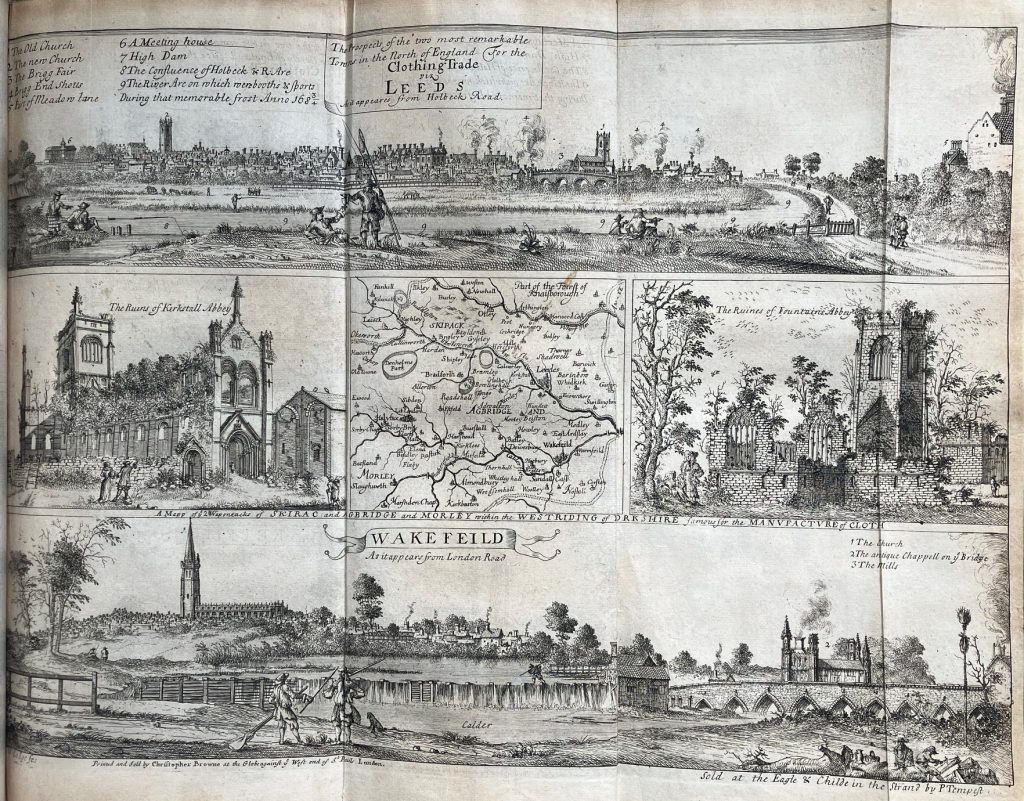
Ralph had the three drawings engraved by John Sturt, the prospect of Leeds and the views of the two churches, and they embellished the book when it was published in 1715 as Ducatus Leodiensis (or ‘The Duchy of Leeds’; there was a Duke of Leeds, a title created in 1694, but there was never a Duchy; the book was dedicated to the second Duke’s heir). Ralph also included an etching by William Lodge (made about 1680), showing another view of Leeds from the south, and other views (originally sold as an independent print).
Thus, Thoresby and Place set a precedent with their first view of the town: many more views of Leeds were in prospect, over the years to come (including one done a hundred years later in 1816 by one of Britain’s greatest painters, JMW Turner, which was the first prospect of an industrialised town).