
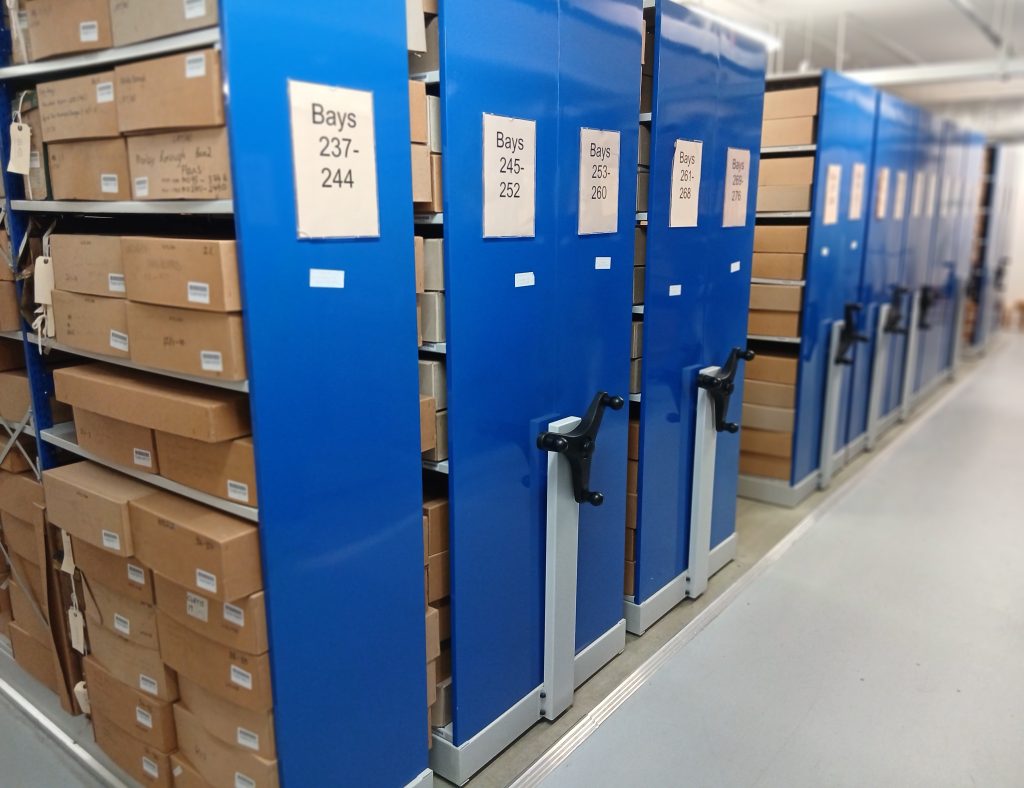
Tucked away between Morley and Gildersome is the Leeds archives collection, part of the West Yorkshire Archive Service. A group of Leeds Civic Trust members were privileged to be shown around on the 19th March, and to look at a selection of their holdings.
The Archive’s purpose is to collect archive materials, record them, conserve them, and make them available for anyone to use. It is part of a national network of Local Authority archives.
The West Yorkshire Archive Service is spread over five locations, each covering its own area: Leeds, Bradford, Halifax, Kirklees, and Wakefield. Wakefield also includes material for the West Riding as a whole. Leeds has materials from areas that were in the West Riding up to the 1974 Local Government reorganisation but are now in North Yorkshire: these include their oldest record…
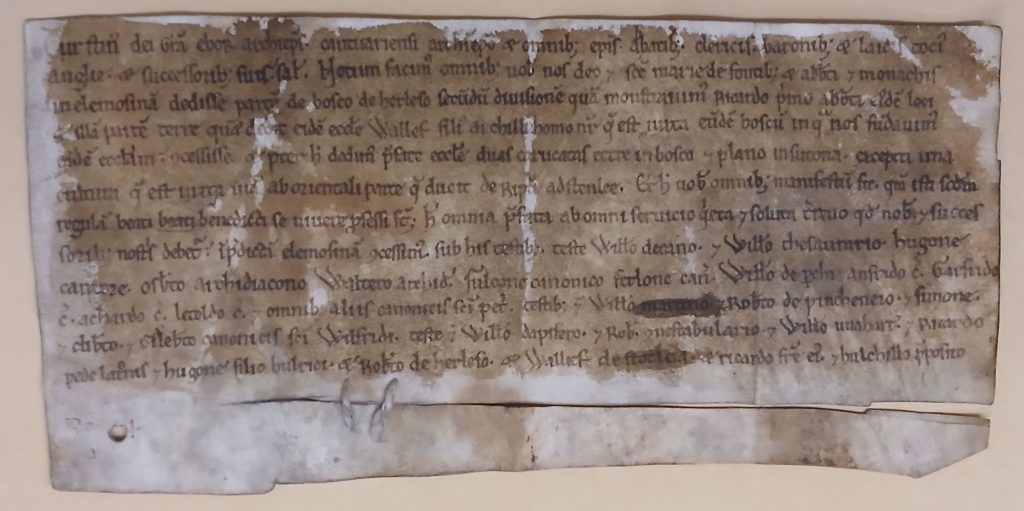
What do they collect? It’s hard to define, but basically, written and pictorial records of all sorts. Objects belong (mainly) in museums, and published material belongs in libraries: digital records are increasingly important (bringing problems of their own). Sources include courts, churches (such as St Peter’s Parish registers), local government (Morley Borough Council financial records, with Tadcaster Rural District Council papers being an example of pre-1974 holdings), families and estates, businesses (400 boxes of material from Waddingtons), community organisations (records from the Leeds and County Conservative Club were waiting to be processed), and private individuals. Many organisations also have their own archives, the Marks & Spencer archive in the University of Leeds being a prime example. In short, they are happy to receive relevant material from anyone.
They get two or more donations (called ‘accessions’) each week. These can range from a folder to a few boxes or volumes to a van load. On receipt, each accession is issued a number and a barcode, before being put in a suitable box for shelving. All materials have to be described in general terms – they don’t record every single item. They have a target of 10 working days to process new material, which they have to do in between dealing with requests and inquiries from the public. They get some help from volunteers, which is really appreciated.
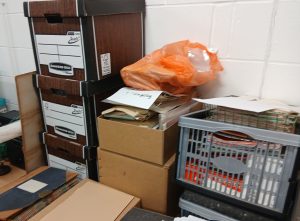
Part of the accessioning process is deciding what to keep; pace is fast running out and many donations have little value: some are passed on to other archives who may need them, but many go for confidential shredding.
One part of taking in new materials is checking them for mould: anything suspicious is put to one side for the Wakefield-based conservation team to deal with.
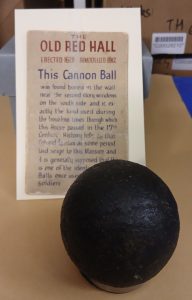
The first stop on our tour was the ‘Red store’, with 17.5 million boxes held on mobile shelving in archival conditions, i.e. a temperature of 15 to 18°C and humidity of 55 to 65%. Second stop was the ‘Blue store’, their store for less popular material, spread over two floors. Both areas are covered by a fire suppression system. En route we saw their oldest record, a parchment deed relating to Fountains Abbey dating from 1138. We also saw an object that they are keen to hold on to – a cannon ball, found embedded in a wall of the Old Red Hall in 1912. It was presumably originally fired at the Hall during the English Civil War in the 1640s. (The site was later occupied by Schofields department store and then The Core, now itself demolished.)
We had a short discussion about digital materials – how in many ways they are easy to store in the short term, but hard to keep and make useable in the long term. How many people have 3½ inch floppy discs for which they no longer have equipment that will read them? Or have they migrated the content onto a more modern medium? Think of that on an archival scale! They do digitise some material but they always keep the original.
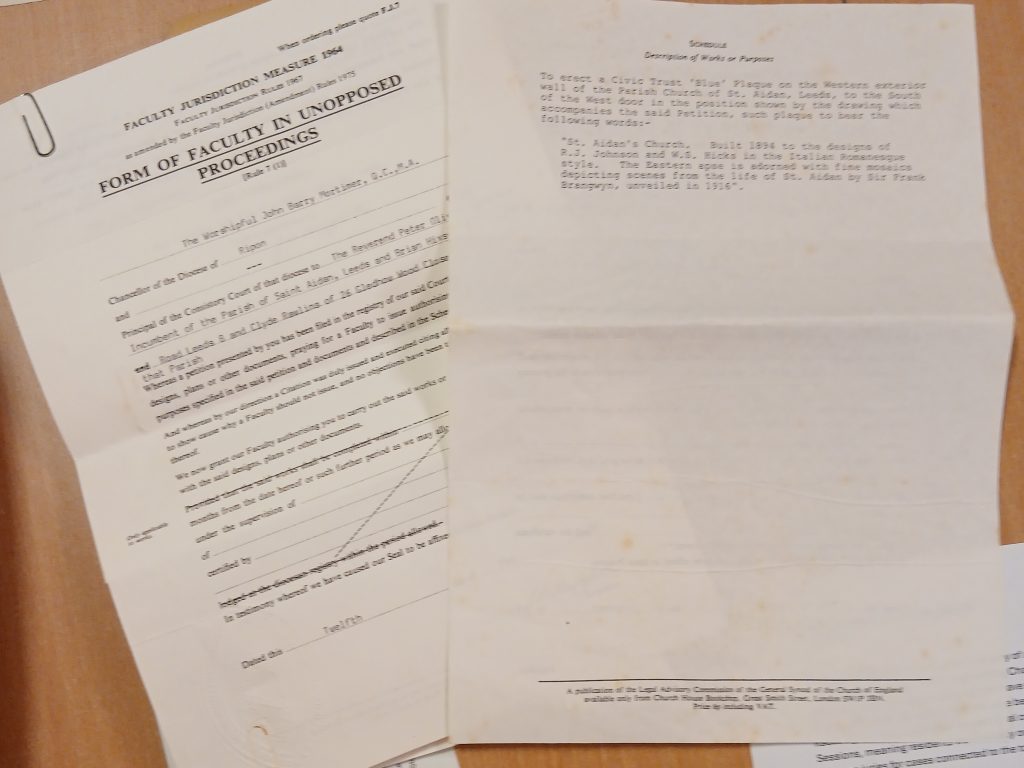
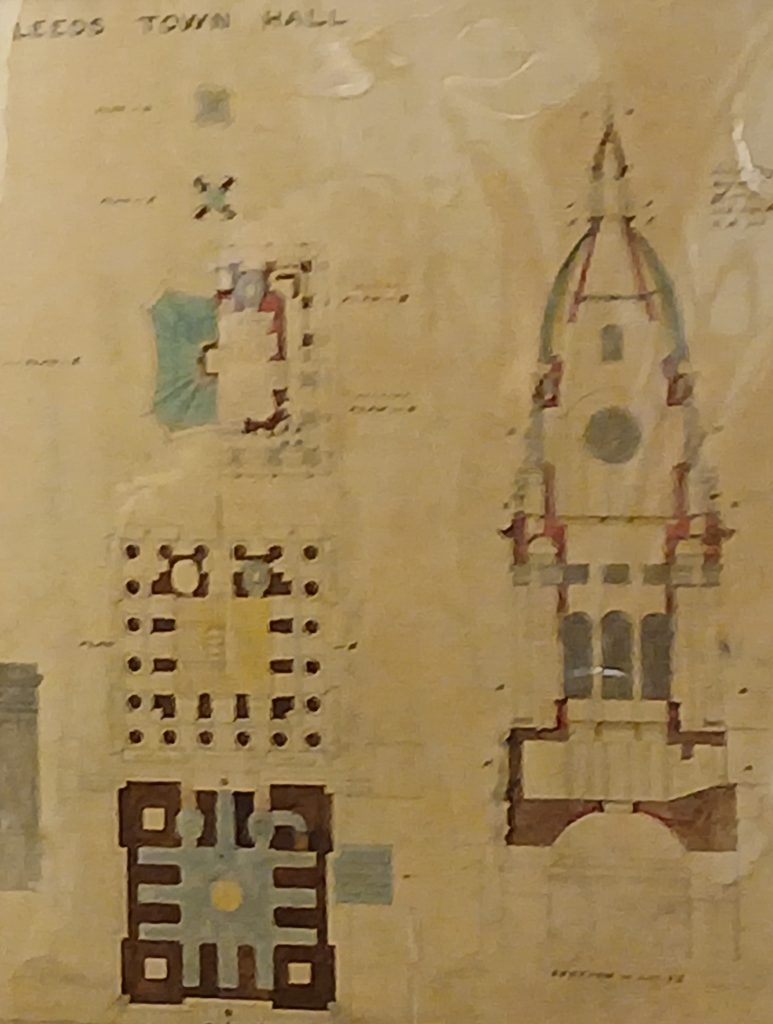
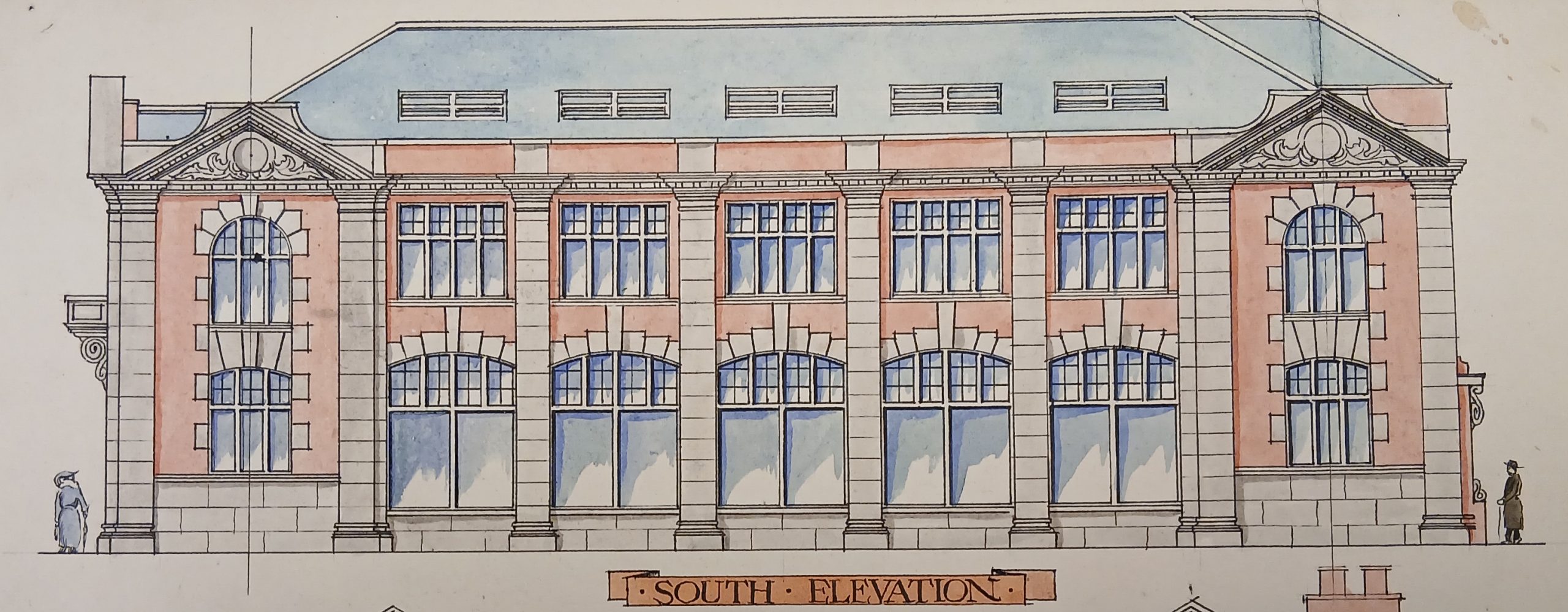
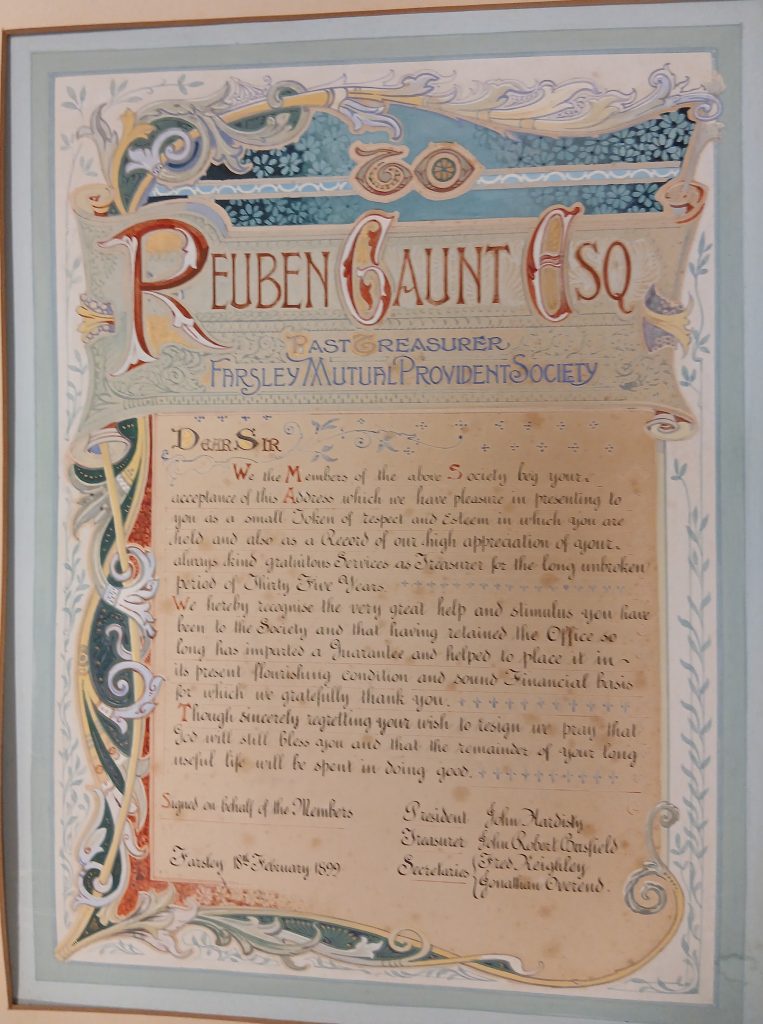
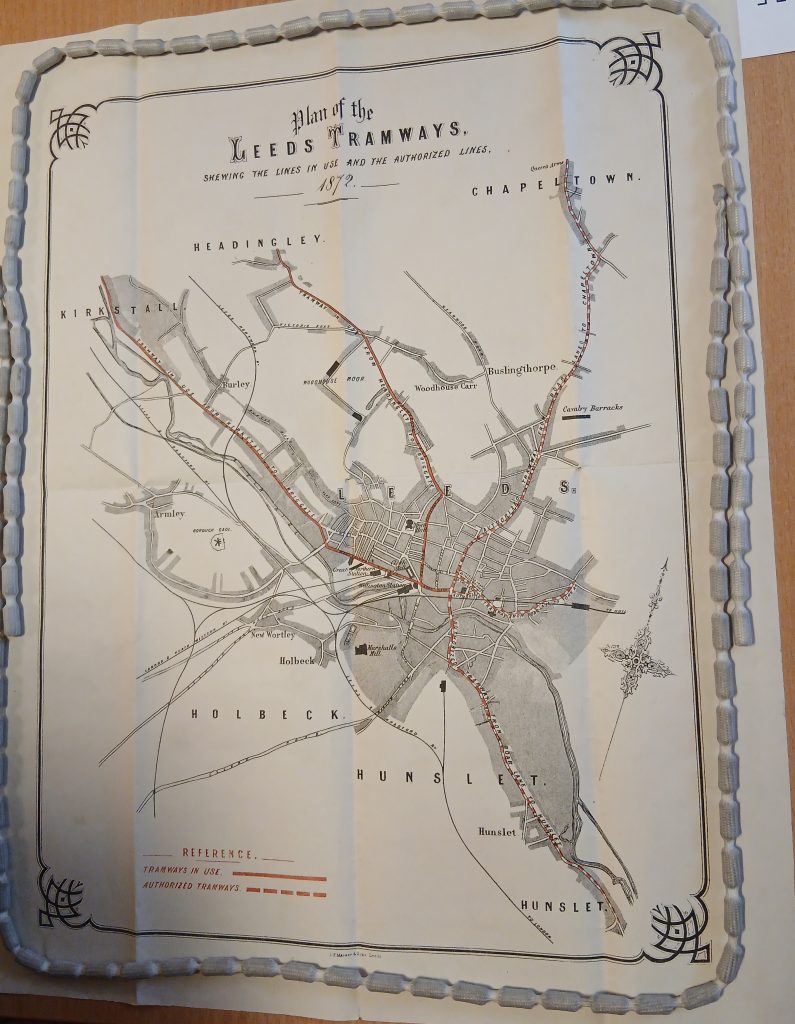
The third and last port of call was the search room. This the room where visitors can look at (pre-ordered) items. The staff had laid out some interesting items for us to look at, and were there to answer all our questions. Of current interest was the copy of the 1626 town charter (the Leeds original was lost in the Civil War so a copy had to be got from London). But there were building plans, photographs from a century ago, parish records, Grand Theatre posters printed by Waddingtons, a map of the tram system (unfortunately from 1872, not 2026), and a Church of England document permitting a Leeds Civic Trust blue plaque to be fixed to St Aidan’s church in Harehills.
To attract visitors and increase public awareness of the Archive Service, the staff give talks, encourage visits like ours, and put on occasional exhibitions (for example the one they assembled for Heritage Open Days last year). This year they are giving several talks about the 1626 Charter.
All in all this was a really enjoyable and informative Leeds Civic Trust visit. Many thanks to Vicky, the lead archivist and our guide, and to the staff, Debbie, Alex, and Harriet